 Deep Insight Think Deeper. See Clearer
Refresh
Double, Double, AI bubble?

Is the artificial intelligence boom about to bust? We’ve watched dissent surrounding the technology’s dubious profitability percolate from tech bloggers through social media all the way up to big news organizations over the past few months, with some analysts warning that a major market correction could be due.
Meanwhile, OpenAI, the tech giant and ChatGPT creator at the center of much of AI’s ballooning investment, has just asked for more than $1tn in loan guarantees from the U.S. government.
The astronomical capital required to continue scaling up AI models to the level of hypothesized general intelligence, alongside the fact that (despite some impressive accomplishments) they are yet to match the hype, is causing major market jitters. Adding to that is a billion-dollar bet by ‘Big Short’ investor Michael Burry against Nvidia and Palantir. Do large language models still have some surprises left in the tank? Or should we be loading up the Zeppelin?

Ben Turner
China to win AI race?
A statement from NVIDIA CEO Jensen Huang. pic.twitter.com/Exwx54OYJVNovember 5, 2025
You can read the FT’s reporting here, but just to warn you, it is behind a paywall. CNBC’s free-to-view report of his comments is here.
New comet 3I/ATLAS image
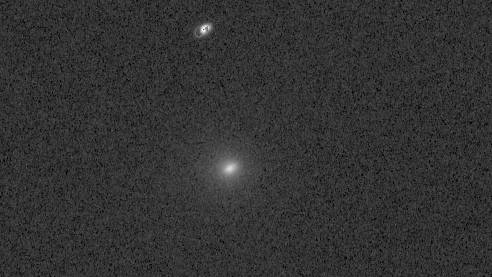
🚨 3I/ATLAS reportedly captured by R. Naves Observatory in Begur, Spain — November 5, 2025.If this image is real… what are we really looking at? Are we doomed? #3IATLAS pic.twitter.com/Gy096UqjMhNovember 5, 2025
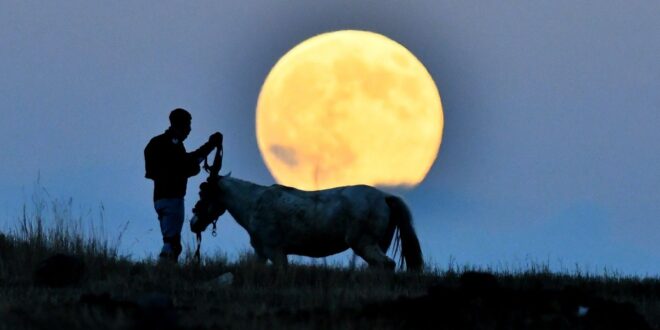
Who caught the Beaver Supermoon?


Patrick Pester
James Webb Space Telescope ‘eclipse maps’ an extremely distant planet

How do you create the first-ever map of a planet that’s 400 light-years away? You use a really good telescope, let’s say the James Webb Space Telescope, that’s so sensitive it can measure the tiny changes in light reflected across a planet’s surface as it’s eclipsed by its star. Then you piece all of those changes together until you create a complete 3D representation.
If it sounds fantastical, it very much is. But scientists actually did it and you can read all about it here.
Maya ruin was actually a gigantic cosmogram

Or perhaps we should hold off on the AI creativity thinkpieces until we find a chatbot that can do this. Archaeologists have published a new study suggesting that Aguada Fénix, a 3,000-year-old site in what is now southeastern Mexico, was actually a gigantic representation of the Maya people’s cosmology.
Working together to build the 5.6 by 4.7 mile (9 by 7.5 kilometer) site may have been a celebrated communal activity, the researchers suggest, similar to the construction of Stonehenge.
Can AI be creative? Do we even want it to be?
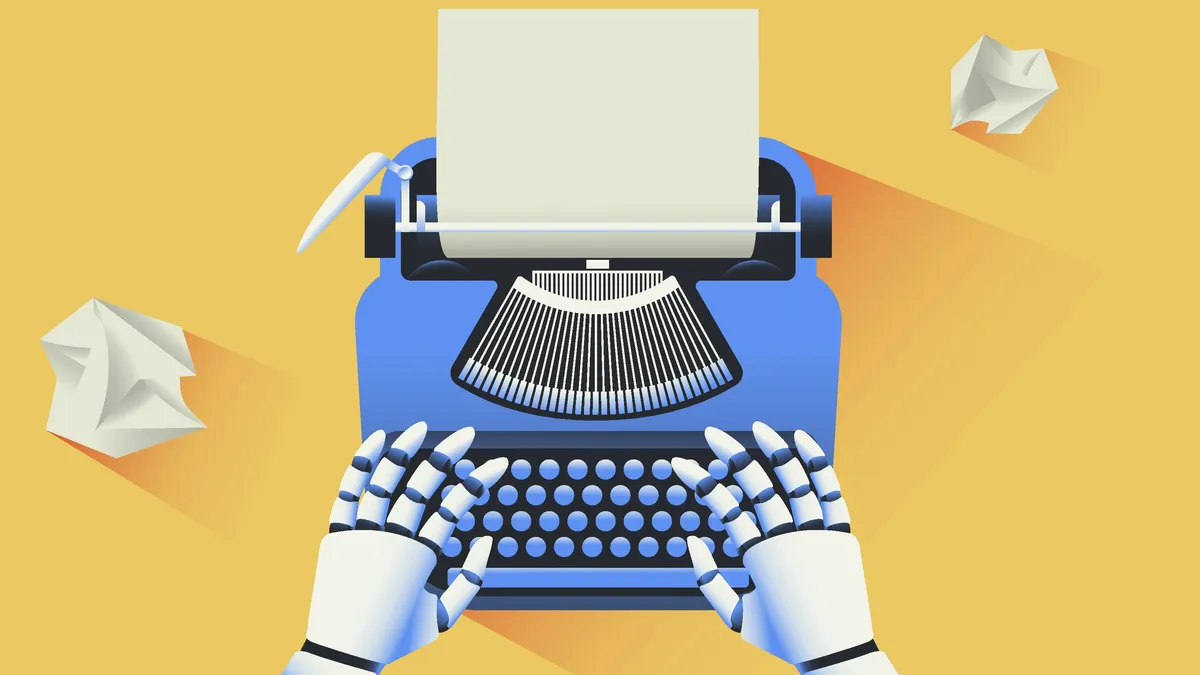
Us humans are pretty proud of our creativity — for centuries we’ve cited our ability to make paintings, compose symphonies, and write poetry (or nowadays really, really good posts) as the key traits that distinguish us from other animals.
But what happens to that self-applied definition if it turns out that artificial intelligence (AI) can do all of those things too? And will that day ever come, or are the machines simply parasitizing our creativity? This fascinating Nature news feature sought answers.
Stranded Chinese astronauts

Harry Baker, one of Live Science’s Senior Staff Writers, has just penned (okay, typed) a story about three Chinese astronauts (taikonauts) who are now stranded in space after their return capsule was struck. The culprit? A suspected piece of “space junk” that hit the capsule just hours before its planned departure earlier today, forcing taikonauts Wang Jie, Chen Zhongrui and Chen Don to extend their time aboard China’s Tiangong space station.
Officials are still investigating exactly what happened. It’s currently unclear how much damage the debris caused or when the three taikonauts, who have been living on the space station since April 24, will be able to return home.
So long 1.5 C

Hi everyone, it’s Patrick, Trending News Writer, here taking the blog baton from Ben. One of the big science stories circulating as of yesterday (Nov. 4) is that the United Nations has announced Earth will speed past humanity’s 1.5 degrees Celsius (2.7 degrees Fahrenheit) climate change target.
The United Nations Environment Programme (UNEP) report found that global average temperatures will likely exceed 1.5 C of warming before 2035, and reiterated calls to slash greenhouse gas emissions, which trap heat in the atmosphere.
In 2015, world leaders signed the Paris Agreement, an international treaty that promised to limit global warming to preferably below 1.5 C and well below 2 C (3.6 F). The findings of the latest report highlight world leaders’ failure to address climate change, but its findings are not unexpected. Ben covered a report in June that found greenhouse gas emissions could exhaust Earth’s “carbon budget” in as little as three years, while last month, I covered a similarly grim report documenting record carbon dioxide (CO2) increases.
The new report comes as many world leaders prepare for the U.N.’s COP30 climate summit in Brazil next week — for reference the Paris Agreement was adopted at COP21. Climate scientists often stress that it’s not too late to reverse course and prevent further warming.
Patrick Pester
Move over 3I, there’s a second Comet ATLAS in town
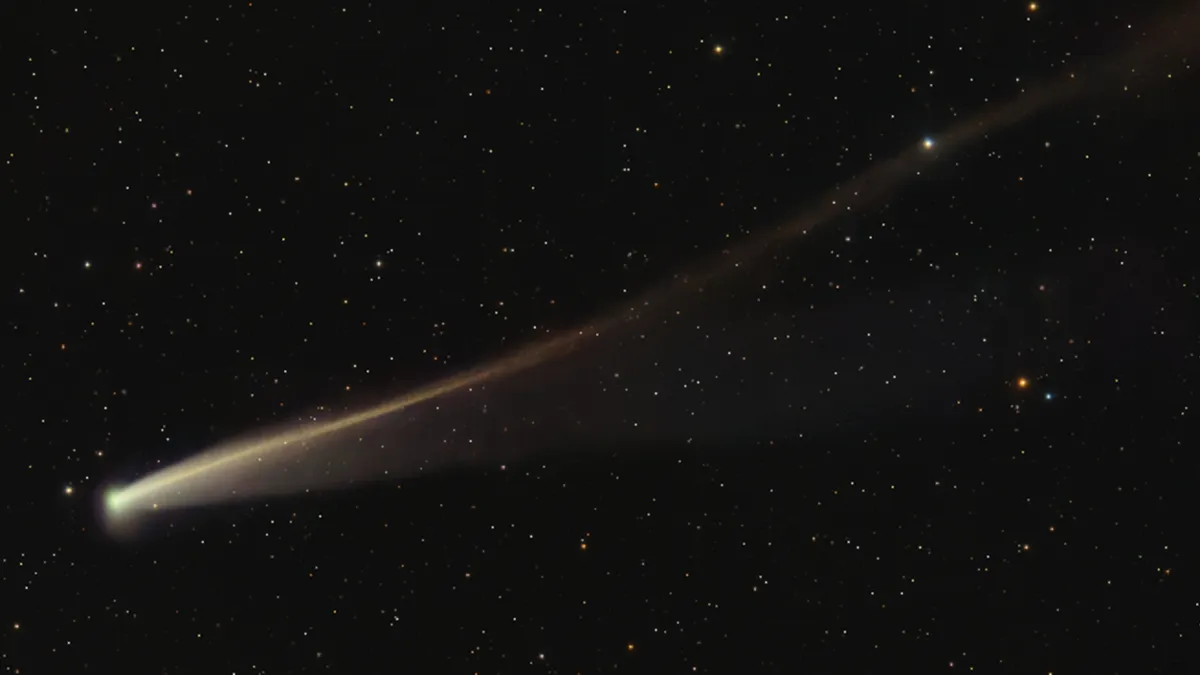
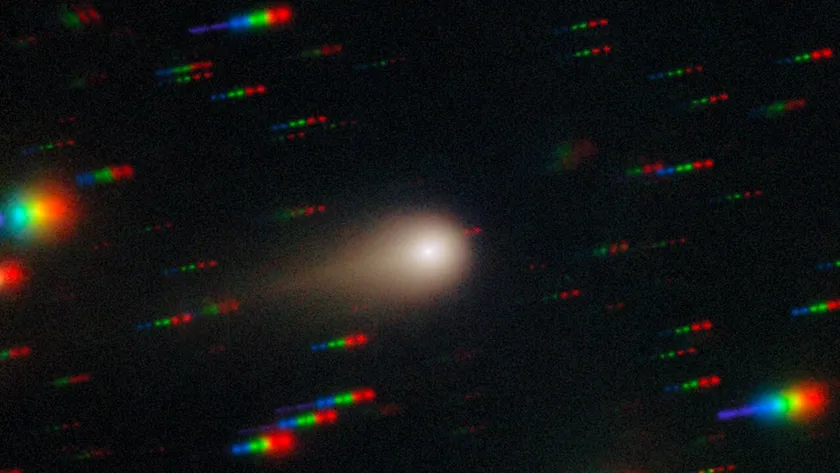
We’ve been so engrossed in coverage of 3I/ATLAS that we nearly failed to note another comet currently in Earth’s skies. This one is called C/2025 K1 (ATLAS), or the “other ATLAS,” and it survived a near-doomed passage around the sun to emerge as a beautiful golden ribbon.
The exact reason for this comet’s gold coloration is unclear, but astronomers think it could have something to do with its relatively low ratio of gas to dust. Studying it could give scientists some more clues into the conditions in the Oort cloud, the mysterious shell of icy objects at the edge of our solar system where the comet was born.
What does falling into a black hole feel like?

Ever wondered what it would feel like to get swallowed up inside the crushing gravity of a black hole?
Yeah, I sometimes have bad days too, but that’s rather beside the point for this fascinating excerpt from science writer and physicist Jonas Enander’s new book “Facing Infinity: Black Holes and Our Place on Earth,” which takes us step-by-step through the gory yet fascinating ordeal.
NASA gets a new boss

For all those who haven’t left for good because of the spiders, let’s return to space — well, space policy — with news that President Trump has renominated Jared Isaacman as the new NASA chief.
Isaacman, a billionaire and key Elon Musk ally, has been setting Washington abuzz all week with a leaked memo that outlines plans to outsource some of NASA’s missions and treat the agency like “more of a business,” Politico reports. Trump initially put Isaacman’s name forward to lead the agency in December 2024, but his nomination was abruptly pulled during a public feud with Musk earlier this year.
Spider megacity discovered inside sulfur cave
Back on planet Earth, and deep inside a pitch-black, sulfuric cave on the Albanian-Greek border, we reported on a study that discovered a spider “megacity” — containing over 111,000 arachnids forming a web that may be the largest ever found.
Comet me, bro

Good morning, science fans. Ben Turner, Live Science’s Acting Trending News Editor, here to smash a big bottle of champagne (or in my case a mug of coffee dregs) on the bow of this blog.
Leading our coverage this morning, as they have been all week, are updates on Comet 3I/ATLAS, the fascinating third-ever interstellar visitor to our solar system being tracked by astronomers as it peeks out from behind our sun. The comet, which is 7 miles (11 kilometers) wide and traveling at 130,000 mph (210,000 km/h), has rapidly brightened as it neared our sun, changing colors three times as it sheds its highly-irradiated coma.
Before you ask, no, it’s almost certainly not an alien spaceship. But that doesn’t mean the more than 7 billion-year-old object doesn’t have a wealth of secrets to offer us about its distant home star system. We’re working on a trail of exciting updates to this story, so keep comet-ing back.
Good morning and welcome to the Live Science news blog.
While we cover the most important or interesting topics of the day, there is no way we can report on it all, not even using AI (and we are very clear about how we use it. TL;DR — we don’t).